
 Spain · Spring 1615
Part of: The third sally, to Barcelona · 11 of 12
11 · Barcelona · 23 Jun – 3 Jul
The Knight of the White Moon

Trip details
- When
- 22 May – 9 Jul 1615
- How long
- 49 days
- Who went
- Me and Sancho Panza
- Stops
- 12
- Getting around
- 800 km on horse and donkey, and one enchanted boat
In this story · 5 chapters
I had meant to go to Zaragoza for the jousts. Then I learned that some impostor had written a false second part of my history, in which a false Don Quixote goes to Zaragoza and does foolish things there. So I changed my road, to show the world the lie. I would not set foot in Zaragoza. I would go to Barcelona instead. I have never regretted it, and I have never stopped regretting it, and the reader will see why.
01 Roque Guinart
In the woods of Catalonia, one morning, we were surrounded by forty outlaws of the band of Roque Guinart, the most famous in that country. I was caught with my lance leaning against a tree, and I sat on Rocinante with my head bowed, more ashamed of that carelessness than of any beating. The outlaws began on Sancho's saddlebags. Sancho said nothing, which shows how frightened he was.
Then Roque himself rode up, a grave, strong man of middle years, and when he heard my name he treated me with great courtesy and had every crust returned to Sancho. I spent three days with him. He was brave, quick, fair in dividing what his men took, and sorry, I think, for the life he led, into which some old injury and its revenge had driven him. I told him that if he would come with me and learn the profession of knight errantry, with its hardships and penances, he would find the road back to heaven in no time. He laughed, kindly, and said he would think about it. Then he wrote to a friend in Barcelona that Don Quixote was coming, and sent us on by secret paths.
02 The sea
We reached the shore on the morning of Saint John's day, and there I saw the sea for the first time in my life. Nothing I had read prepared me for it. It was wide beyond measuring, green and blue, breathing like a living thing, and the sun came up out of it as from the edge of the world. Sancho, who had seen more water in the past month than in his whole life, said it was very large and probably very salty, and asked where its far bank was.
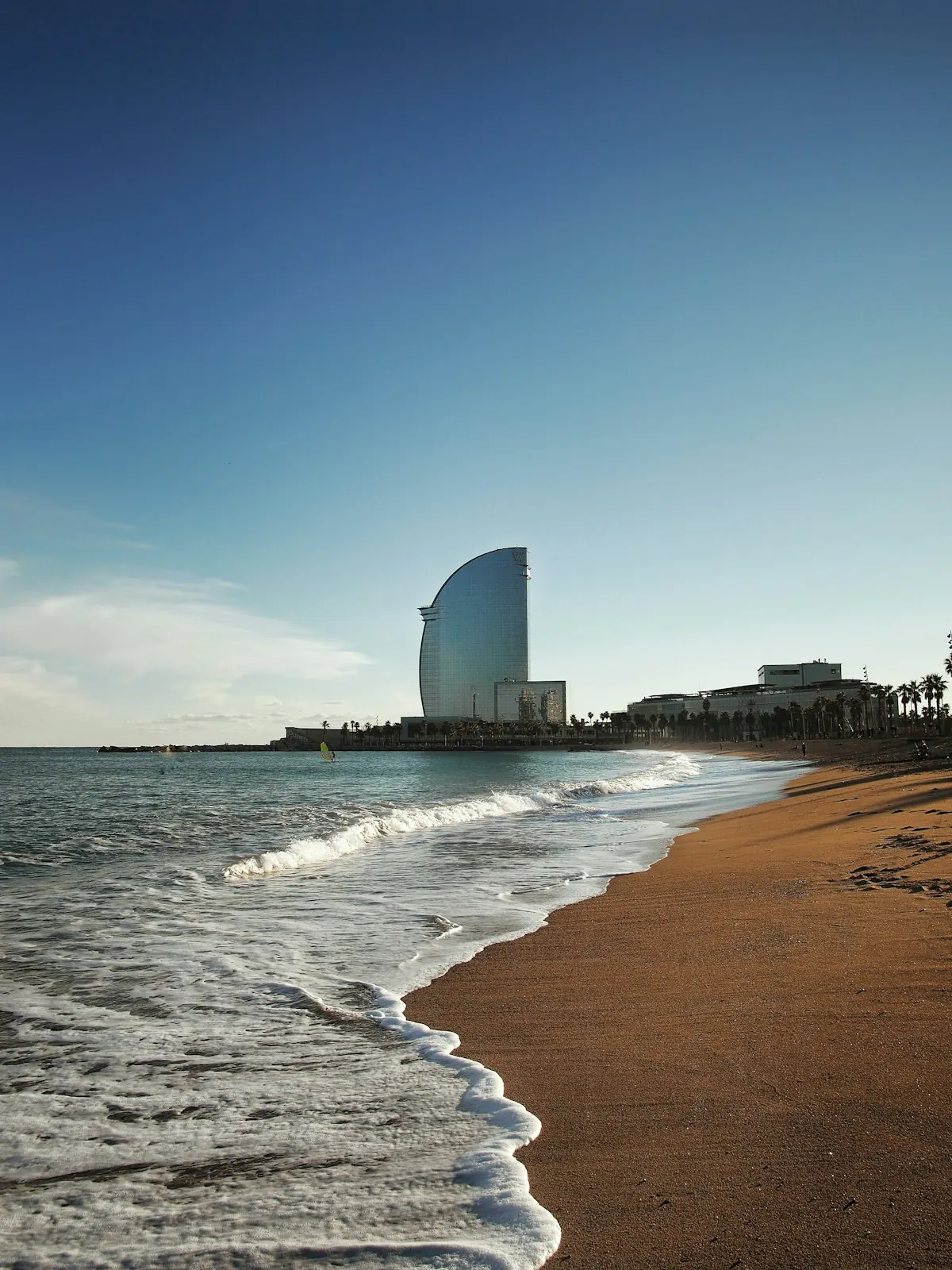
On the water lay the galleys, and when they saw us they fired their guns and ran up their flags, and the oars beat the sea all together, and trumpets played. From the city a troop of horsemen came galloping out in fine liveries, and their captain hailed me as the true Don Quixote of La Mancha, the very one in the book, and not the counterfeit. They had read the right book. I answered in a few modest words, and we rode into the city surrounded by music.
I mention, in fairness, that as we entered, two wicked boys slipped bunches of furze under the tails of Rocinante and Dapple, who bucked until we were both on the ground. This was the work of no enchanter. It was the work of boys. We remounted, and the music carried on.
03 Don Antonio Moreno
Our host was Don Antonio Moreno, the friend of Roque, a rich and cheerful gentleman who loved a joke. He gave us the finest rooms in his house, and showed me off to the city from his balcony, and took me through the streets wearing a long cloak; behind me, I learned later, someone had pinned a parchment on which was written: This is Don Quixote of La Mancha. Everyone who read it called out my name, and I said to Don Antonio that such is the power of a knight's fame, that even people who had never seen him knew him on sight. He agreed most warmly.
He showed me a bronze head that answered questions. I asked whether what I saw in the cave of Montesinos was true or a dream. It said there was something of both. I took this for the answer of a very cautious enchanter. There was also a ball, where the ladies of Barcelona danced me to exhaustion, until I sat down on the floor and told them I belonged to Dulcinea and could not be danced out of it. On the galleys, by some custom of the sea, the rowers passed Sancho from hand to hand down the whole length of the ship, and he did not speak for an hour.
04 The beach
Then, one morning, I rode out alone on the beach in full armour, for I was never at ease out of it. Towards me came a knight, also armed from head to foot, with a shining moon painted on his shield. He stopped at the distance from which one knight addresses another, and called out to me in a loud voice.
He was the Knight of the White Moon, he said, and he had come to make me confess that his lady, whoever she might be, was beyond comparison more beautiful than my Dulcinea del Toboso. If I would confess it freely, he would spare my life. If I would fight and he defeated me, he asked only this: that I should put down my arms, stop looking for adventures, and go home to my village for one whole year, and live there quietly without lifting a sword. If I won, his horse, his arms and his fame would be mine.
I answered that I had never heard of him, nor of his lady, and that he could not have seen Dulcinea, for if he had he would not say such things. I accepted his conditions, all except the one about his lady, which I could not accept on my honour. The Viceroy of Barcelona came riding down with Don Antonio and many gentlemen, having heard what was happening, and asked whether this was a joke. Neither of us thought it was. The Viceroy gave us the field.
We turned our horses and took our distance. Then we ran together. His horse was much faster and stronger than Rocinante, who had carried me for a long time and much further than he was made for, and the Knight of the White Moon did not even lower his lance, I am told; he raised it, as if he did not wish to wound me, and his horse struck Rocinante so hard that Rocinante and I both went down on the sand with a terrible fall.
He stood over me with the point of his lance at my visor and told me I was beaten, and must keep the conditions or die. I lay bruised and dazed, and I answered him from inside my helmet in a voice I did not recognise. I told him that I had lost, and that the loss was mine alone. Dulcinea's beauty had not fallen on the sand with me, and I would not lie about it to save my skin. If he wanted a confession against her, he would have to take my life instead, and he was welcome to it, since he had already taken my honour.
My weakness is mine. Her beauty is not mine to give away.
The Knight of the White Moon said he would do no such thing. The lady Dulcinea might keep her fame untouched; he asked only that I go home for a year. The Viceroy and Don Antonio heard me promise it, on my word as a knight, and the White Moon turned and rode back into the city. Don Antonio rode after him to learn who he was, and came back much later, smiling, and would only tell me that the man meant me no harm. I believe that. A man who means harm uses the sharp end.
05 What I took away
They carried me on a chair to Don Antonio's house. I was six days in bed, sad and thoughtful, turning that morning over in my mind. Sancho sat by me and said that there were fewer bones broken than at the inn, and that today's loss is tomorrow's luck, and a great many other things, and I let him say them.
I will say this, and then I will close. I have been beaten by muleteers and by shepherds and by carriers and by galley slaves, and I have been thrown by windmills, and I have never once thought myself defeated, for those were the deceptions of enchanters, or the blows of base men, which count for nothing. This was different. A true knight, armed and courteous, fought me fairly on a field before a Viceroy, and won. That is defeat, and there is no enchanter to blame for it. But the books of chivalry say nothing against a knight who loses; only against one who breaks his word. I will go home. I will keep my promise. And Dulcinea remains the most beautiful lady in the world, which no lance on any beach could change.
To Cide Hamete Benengeli: write this chapter more carefully than all the rest. Write that I fell. Then write that I kept my word, in a larger hand.
The beach at Barcelona