
 Spain · Spring 1615
Seven weeks, a book about us, and the sea
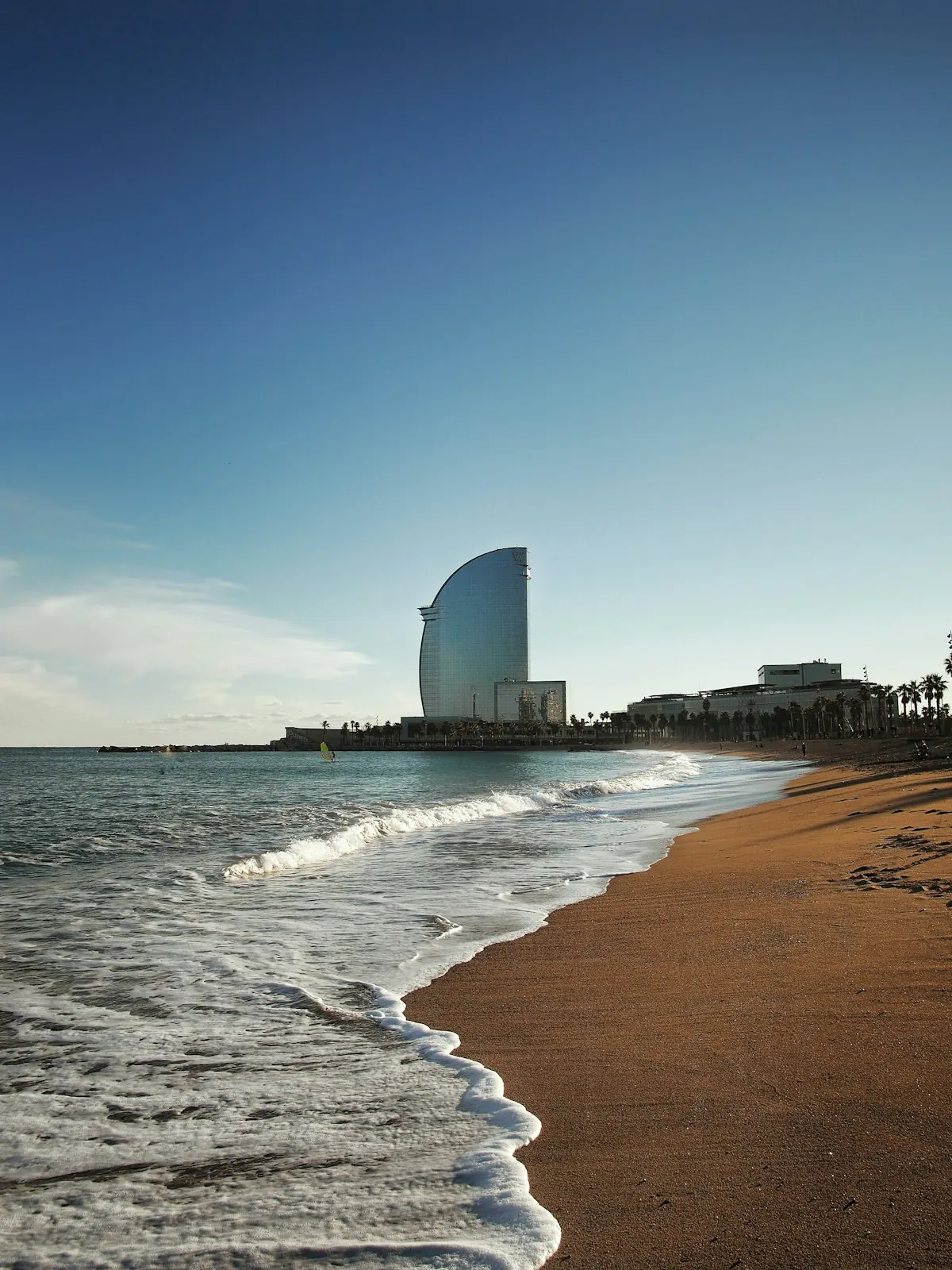
A bachelor of Salamanca told me a book of my deeds was already in print. I rode out a third time to give the next one better material. I saw the sea at Barcelona; I was defeated there, on the beach, and gave my word to go home for a year.

- When
- 22 May – 9 Jul 1615
- How long
- 49 days
- Who went
- Me and Sancho Panza
- Stops
- 12
- Getting around
- 800 km on horse and donkey, and one enchanted boat
Trip details
- Who went
- Me and Sancho Panza
- Getting around
- 800 km on horse and donkey, and one enchanted boat
In this story · 4 chapters
For nearly a month after I came home in the cage I kept to my bed and ate what I was given, and let my niece and my housekeeper believe that I was cured. The priest and the barber visited me and spoke very carefully of the weather and the price of wheat, and I let them think it had worked, until one evening the conversation turned to the Turk and his fleet, and I mentioned the knights-errant who might be called upon to stop him. Their faces fell, and I knew I had been found out. But it was Sancho, some days later, who brought me news that changed everything.
He came puffing to my door and said that the son of Bartolomé Carrasco had come home from his studies in Salamanca, a bachelor now, and that this bachelor had told him that our story was going about the world in a book, under the title of The Ingenious Gentleman Don Quixote de la Mancha. And it named him, Sancho Panza, too, and the lady Dulcinea del Toboso, and things that had passed between the two of us when we were alone, so that he had crossed himself in fright wondering how the historian could have known them.

01 The bachelor Sansón Carrasco
I sent for the bachelor at once. He was a small man, not tall, with a round face, a flat nose and a large mouth, very fond of jokes and of teasing, and about twenty-four years old. He went down on his knees as soon as he saw me and said, “Give me your hands, Señor Don Quixote de la Mancha. You are one of the most famous knights-errant there have ever been in all the round of the earth.” He told me that the author was a Moor, a sage, named Cide Hamete Benengeli, and that the book had been translated from his Arabic, and that more than twelve thousand copies had been printed, in Portugal, in Barcelona and in Valencia, and that it was soon to be printed in Antwerp. I said it was one of the greatest satisfactions a virtuous man can have, to see himself while still alive printed in a good name and passing through the mouths of the people. He said it was so.
I asked him which of my deeds were most praised. He said opinions differ, as tastes do. Some prefer the windmills, which I told him were giants; others the fulling mills; this one the two armies that turned into sheep; that one the dead body carried to Segovia; another the freeing of the galley slaves; and others again the battle with the valiant Biscayan.
I asked, rather anxiously, whether the author had recorded the beatings. Sancho said at once that this was where the truth lay, since all the beatings were there. I told him that it would have been more just for the author to pass over some of them in silence, since an action that neither alters nor changes the truth of the history need not be written if it does the hero no credit. Aeneas, I said, was not as pious as Virgil paints him, nor Ulysses as prudent as Homer. Sansón said that was very well for a poet, who may sing things as they ought to have been, but that a historian must write them as they were. I bowed to this, though privately I do not see why a historian should be less courteous than a poet.
02 Faults in the book
The bachelor told me that some readers find faults in it. They say the author put in a tale, about a man of Florence who tested his wife, which has nothing to do with my history and does not belong there; I told him I had heard it read at the castle and thought the same. They say that he forgot to tell who stole Sancho's donkey, and then had Sancho riding it again without saying how he got it back; and that he does not say what Sancho did with the hundred gold escudos he found in the valise in the Sierra Morena. Sancho, who was present, went red and said he would explain everything, but that his stomach was empty, and he went home to eat. I suspect that the gold and the donkey will both remain a mystery.
I wondered, privately, whether the sage had been misled by enchanters, for an enemy enchanter could easily whisper false things into a historian's ear. But the bachelor assured me that the book was much loved, so that children leaf through it, young men read it, grown men understand it, and old men praise it; and that whenever people see a lean horse they say, There goes Rocinante. I confess I found this very sweet to hear.
03 The household objects
Once it was known in the house that I meant to go out again, there was war. My housekeeper went straight to the bachelor, and to the priest, crying that her master was going to go out a third time looking for misadventures, and that she could not tell which ones, since he had come home the first time across a donkey, and the second time in a cage on an ox-cart, so thin and yellow that his own mother would not have known him. My niece said that I was old, and ill, and had no business setting myself up as a knight when I was not even a gentleman of means, and that the knights-errant of the books were only lies. I told her that if she were not my sister's daughter I would make such an example of her for that blasphemy that it would ring through the world. Then I kissed her, because she was crying.
To my great comfort the bachelor, who has a good head, took my side. He told me privately that I should go, and soon, and that he would be the first to approve it. I thought this very generous of him, and only now and then have I wondered what his reasons were.

04 Sancho's wages
Sancho came to me a day or two later, very formal, and said that his wife Teresa had given him advice, and that he wanted to settle his wages in advance, by the month, so that he would know what he was earning, since promises are fine but a bird in the hand is worth a hundred flying. He said his Teresa says that a man must tie up the sack before he fills it, and that when you are given the heifer you should be ready with the rope.
I told him that I had read all, or most, of the histories of the knights-errant, and I had never found that any knight paid his squire a fixed wage. They served at the knight's pleasure, and when they least expected it, if their master's fortune was good, they were rewarded with an island or something like it, or at least a title. If Sancho wished to serve me on those terms, very well. If not, I would find another squire, more obedient and more diligent, and less given to talking. And I said that the bachelor himself, I had no doubt, would be glad of the office.
At that, Sancho's face clouded over, and his heart fell, for he had thought I would not go without him for all the world. Sansón came in at that very moment and offered at once, with great eloquence, to be my squire himself, which nearly undid Sancho altogether. Then Sancho, with tears in his eyes, said he would come, on the old terms, and that he had never meant anything by it but what his wife had put into his head, and that the Panzas were famous for keeping their word. I embraced him, and we agreed to leave in three days.
To the sage Cide Hamete, who it seems has been watching all along: I am told you set down even the things I said in private. I shall try, from now on, to say only what is worth setting down.
A village in La Mancha