
 Spain · Spring 1615
Part of: The third sally, to Barcelona · 2 of 12
2 · The wood of the Knight of the Mirrors · 23 – 24 May
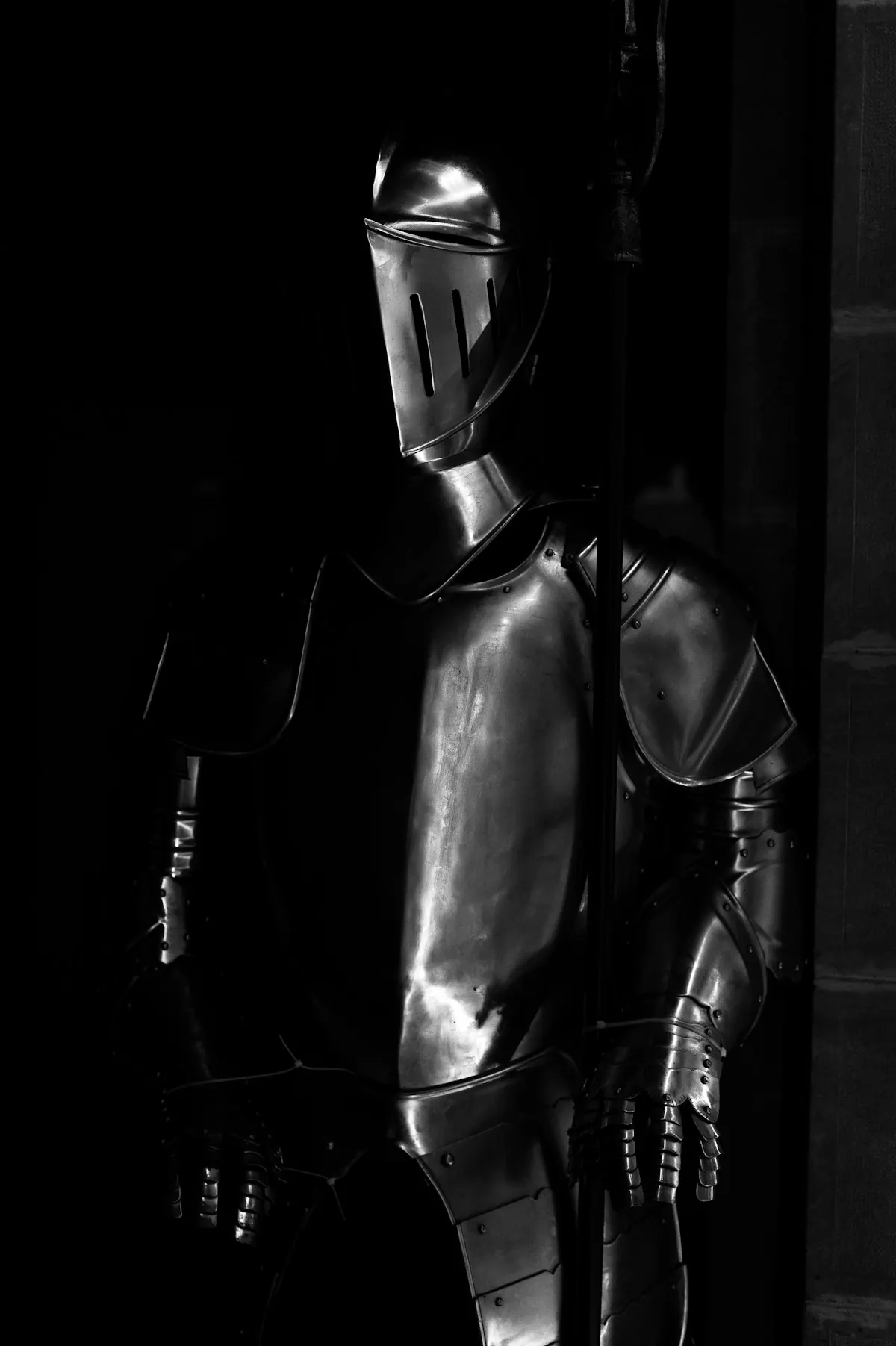
The Knight of the Mirrors

Trip details
- When
- 22 May – 9 Jul 1615
- How long
- 49 days
- Who went
- Me and Sancho Panza
- Stops
- 12
- Getting around
- 800 km on horse and donkey, and one enchanted boat
In this story · 2 chapters
The night after El Toboso we lay down under some tall trees, my heart still sore over my lady's enchantment, when I heard the creak of harness and the sigh of a man settling himself on the grass. Presently a voice rose in the dark, singing a sonnet to a lady called Casildea de Vandalia. It was not a good sonnet. The rhymes limped and one line had two feet too many. But it was sung with feeling, and I knew at once that we had a knight errant for a neighbour, for who else sings bad verses in a wood at midnight?
I went to him and we talked a long while, sitting on the grass, while our squires withdrew to talk on their own account. He was courteous and well spoken and carried himself like a man who knew the books. He said he had served his lady Casildea for years, and that at her command he had fought the giantess La Giralda of Seville, weighed the Bulls of Guisando, and descended into the pit of Cabra. And then he said the thing that made me grip the hilt of my sword: that he had lately vanquished in single combat the famous Don Quixote de la Mancha, and made him confess Casildea more beautiful than Dulcinea.
I kept my temper, which I think was to my credit. I told him that I knew Don Quixote as well as I know myself, and that the knight he had overcome could only have been some enchanter wearing his likeness, the enchanters of this age being much given to that trick. If he doubted me, I said, here was Don Quixote himself, ready to maintain his own existence with arms on foot or on horse, as he liked.
He took this very calmly. He said that one who had beaten Don Quixote once might do it again, and proposed that we wait for daylight, so that the sun might see our deeds, with the condition that the loser should be at the mercy of the victor in anything that befits a knight. I agreed with all my heart.
01 The squires' supper
Meanwhile Sancho had been entertained by the other squire, who had a leather bottle of excellent wine and a meat pie so large it might have been baked for a regiment. Sancho tells me they agreed that knights errant are a trial, that islands are slow in coming, and that a squire's best friend is his wineskin. The other squire praised the wine's vineyard so precisely that Sancho swore he could taste the very soil of Ciudad Real in it, and they drank to each other's families until they fell asleep with the bottle between them.
At dawn Sancho saw the other squire's face for the first time and nearly fell over backwards. The man had a nose of extraordinary size, hooked like a parrot's, purple as an aubergine, and studded with warts; it hung down past his mouth. Sancho, who fears no man but has a horror of noses, begged me to help him up into a cork tree so that he might watch the battle from a safe height. I helped him, and that courtesy cost me a little time, which is why the stranger had already turned his horse and come back towards his starting place when I charged.
Now I saw that my opponent's surcoat was sewn all over with little mirrors in the shape of moons, so that he glittered like a fishmonger's slab; from this I named him the Knight of the Mirrors. His horse was no faster than mine, and indeed, by the special favour of heaven, it would not run at all. Rocinante, for once in his life, broke into something near a gallop. I took the Knight of the Mirrors full upon the breast and he went over his horse's crupper and lay on the ground without moving.
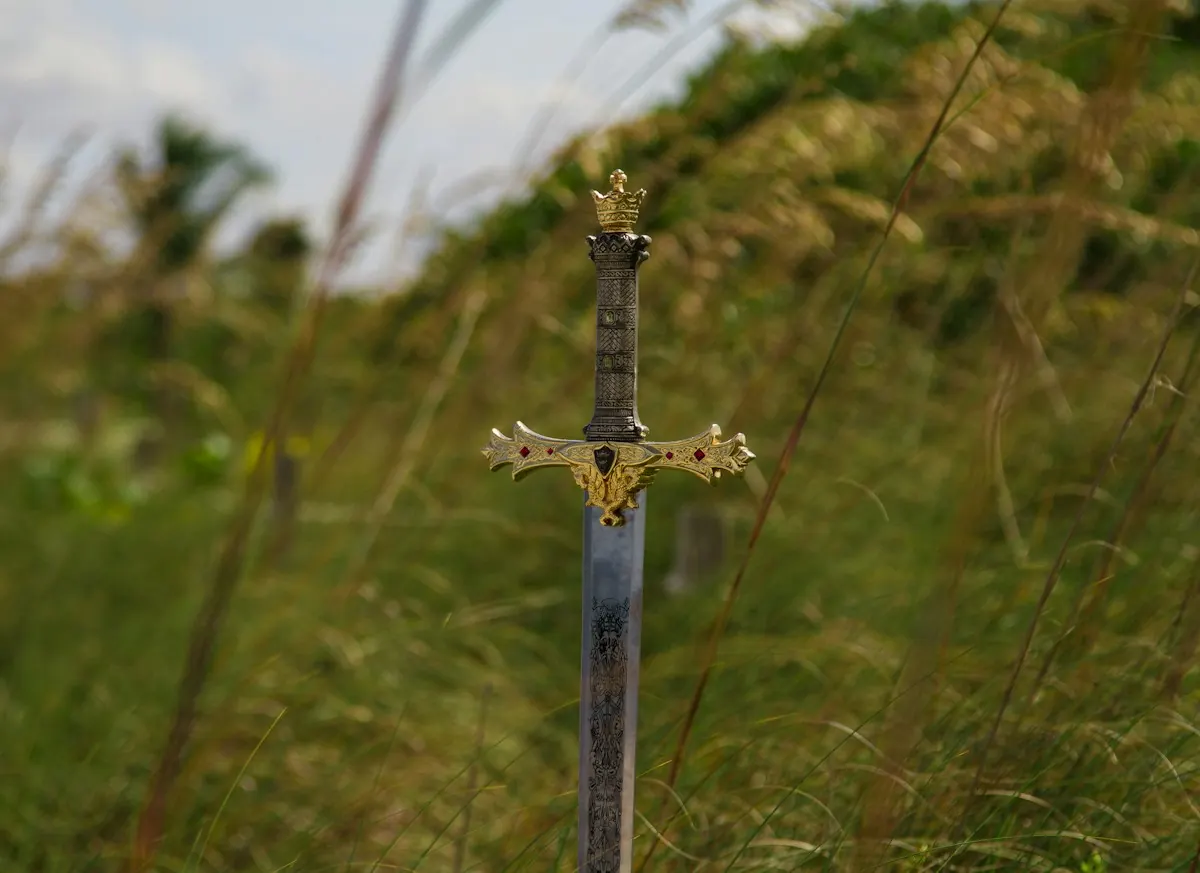
02 The enchanters' masterpiece
I dismounted and unlaced his helmet to see whether he lived. And there, in the light of the morning, lay the face of the bachelor Sansón Carrasco, my neighbour, who had sat in my house not a week before telling me about the book of my deeds. The very same face, the very same snub nose and wide mouth. I called Sancho down from his tree to see it, and he crossed himself several times.
I did not hesitate long. I set the point of my sword at the knight's throat and told him he must confess the peerless Dulcinea more beautiful than his Casildea, and go to El Toboso to present himself before her, and tell me afterwards what she ordered. He confessed it all very readily, in a faint voice. He also admitted that the knight he had beaten before was not truly Don Quixote but someone who resembled him, which I had said all along.
Then the other squire, who had lost his great nose somewhere in the excitement, came running up and begged me not to harm his master, for he was the bachelor Sansón Carrasco. Sancho looked at the squire and cried out that he was Tomé Cecial, his own neighbour and gossip. The squire said he was, and showed us the nose in his hand; it was pasteboard and varnish.
I see the whole plot now, and I set it down for the instruction of other knights. My enemy the enchanter, foreseeing my victory, gave the vanquished knight the face of my friend the bachelor, so that the friendship I bear Carrasco might stay my sword and rob me of the glory. He gave the squire Tomé Cecial's face for the same reason, to soften Sancho. It was cunning work; but it failed, for I spared him out of mercy and not out of friendship, and the victory is mine all the same.
Sancho said that if the enchanters can change faces as easily as that, he would like them to change his wife's temper. I told him not to jest about the black arts.
To the learned Cide Hamete: if a gentleman named Carrasco should come to you claiming that he lay in that wood with his ribs bruised, believe the bruises and not the gentleman.
A wood near El Toboso