
 Spain · Summer 1614
Twenty-five days, one squire, and every enchanter in La Mancha against us
This time I took a squire, a lance, money for the road and a promise of an island. We came home in an ox-cart, in a cage. In between, I fought giants, armies and a Biscayan, and won Mambrino's helmet.

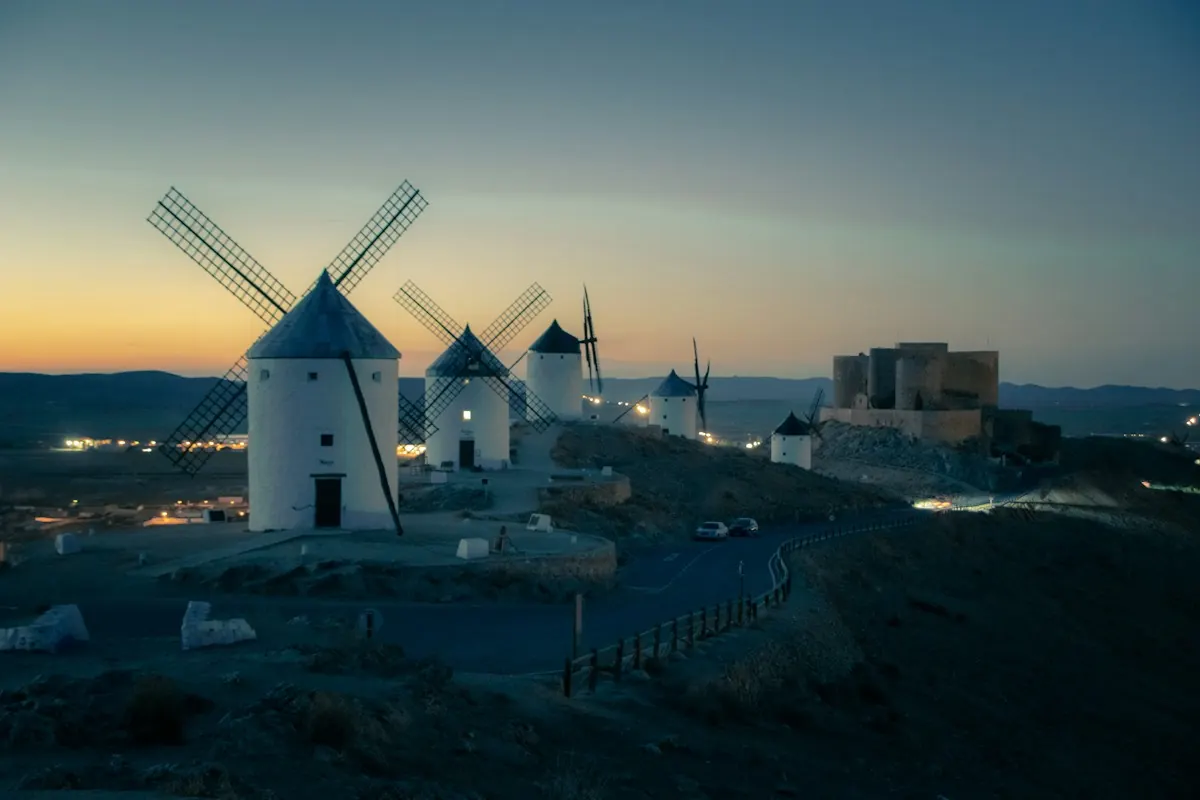
- When
- 20 Aug – 14 Sept 1614
- How long
- 26 days
- Who went
- Me, Sancho Panza, Rocinante and Dapple
- Stops
- 10
- Getting around
- On horse and donkey, home by ox-cart
Trip details
- Who went
- Me, Sancho Panza, Rocinante and Dapple
- Getting around
- On horse and donkey, home by ox-cart
In this story · 3 chapters
I spent fifteen days at home after my first sally, recovering from the injuries that my horse's stumble had caused me. They were quiet days, though not uneventful: while I lay in bed, an enchanter carried off my entire library, room and all. My niece and my housekeeper saw it happen. They told me it was an enchanter riding on a serpent, in a cloud, and that he left the house full of smoke. When I went to look for the room where my books had been, the very door had vanished, and there was only a smooth wall. I knew at once who it was: the sage Frestón, a great enemy of mine, who knows that in time I shall fight a knight he favours and defeat him. I bore it as calmly as I could. A knight must learn to lose his books, though I confess I miss them.
Those fifteen days were not wasted. I had learned on my first journey that a knight errant needs three things the books forget to mention: money, clean shirts, and a squire. The first two I could arrange. The third required judgement.
01 The qualities of a good squire
Having given the matter long thought, I offer here, for any knight who comes after me, the qualities I looked for. A squire should be loyal, since he will share every hardship. He should be strong, since he will carry what the knight cannot. He should be humble enough to serve and wise enough to keep silent when his master is speaking, though I have found this last quality rarer than the others. And he should have some reason of his own to follow, since no man walks the long roads for nothing.
All of these I found in my neighbour, Sancho Panza: a farm labourer, honest to the bone, generous with his opinions, and not, it must be said, overburdened with learning. He is short, broad, round in the belly, and has a wife, Teresa, and two children. I spoke to him many times in those fifteen days, and I persuaded him with many promises, and he agreed to come with me as my squire.
The chief of these promises was an island. I told him, quite truthfully, that it often happens that a knight errant wins an island, or a kingdom, in the blink of an eye, and that I would make him governor of it. Sancho asked several questions on this point. He wished to know whether, if he became a king by some miracle of the kind I described, his wife Teresa would be a queen and his children princes. I said nobody could doubt it. He said he doubted it a little, since he did not think a crown would sit well on Teresa's head, and that countess would suit her better, and even that with God's help. I advised him to commend the matter to God, and not to aim too low. He promised he would aim at least at a governorship.

02 Raising money
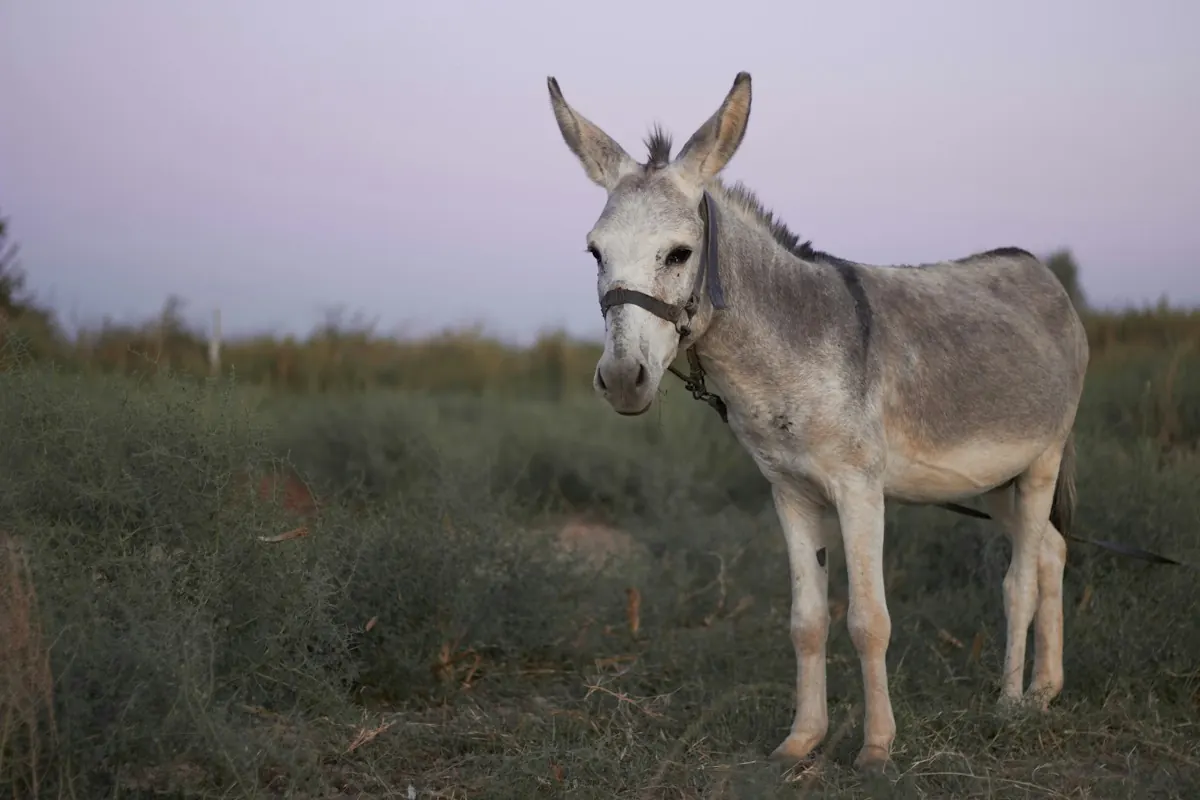
Next, money. I sold a field of vines to a man who knew I was in a hurry, pawned a silver salt-cellar to a man who knew it too, and came away with a reasonable sum and a lesson in commerce. I borrowed a round shield from a friend, mended my broken helmet as best I could, and told Sancho the day and hour we would set out, so that he could provide himself with what he thought most needful. I particularly told him to bring saddlebags. He said he would, and also that he meant to bring a donkey he had, a very good one, since he was not much given to walking.
This gave me pause. I tried to remember whether any knight errant had ever had a squire riding on a donkey, and nothing came to mind. But I allowed it, intending to mount him more honourably as soon as I had the chance, by relieving the first discourteous knight we met of his horse. I also took shirts, and everything else I could, following the advice the castellan had given me.
03 Leaving by night
When everything was ready, Sancho came to my house after dark. He did not say goodbye to his wife and children, and I did not take leave of my niece or my housekeeper. A farewell would only have brought tears and questions, and questions would have brought the priest and the barber, who mean well but do not understand the profession of arms. We slipped out of the village by night, unseen, and travelled so far before dawn that we were certain no one could catch us even if they came looking.
Sancho sat his donkey with the saddlebags before him and the wineskin at his knee, as comfortable as a canon in his stall, already, I could see, measuring himself for his island. We took the same road I had ridden on my first sally, across the plain of Montiel, and found it kinder this time, the hour being early and the sun not yet at its cruellest.
Along the way Sancho reminded me, twice, not to forget the island. I told him that islands were the least of it, that a knight in a good week may win a kingdom with three or four smaller ones hanging from it like grapes, and that one of those would do very well for him. He was quiet for some time after that, imagining it, I suppose. I was quiet too. It was a fine thing to ride out on a fresh morning with a loyal squire behind me and the whole of Spain in front, and I knew the next adventure could not be far.
It was not. I will tell you about the giants in my next account.
Read nextThe giants of CriptanaOur first adventure together, on the morning after we left.To the chronicler of these deeds: the enchanter took my books but not my memory of them. Note it, if you please, as a small defeat for Frestón.
A village in La Mancha