
 Spain · Summer 1614
Part of: The second sally, with Sancho Panza · 8 of 10
8 · Sierra Morena · 27 Aug – 6 Sept
Penance in the Sierra Morena

Trip details
- When
- 20 Aug – 14 Sept 1614
- How long
- 26 days
- Who went
- Me, Sancho Panza, Rocinante and Dapple
- Stops
- 10
- Getting around
- On horse and donkey, home by ox-cart
In this story · 4 chapters
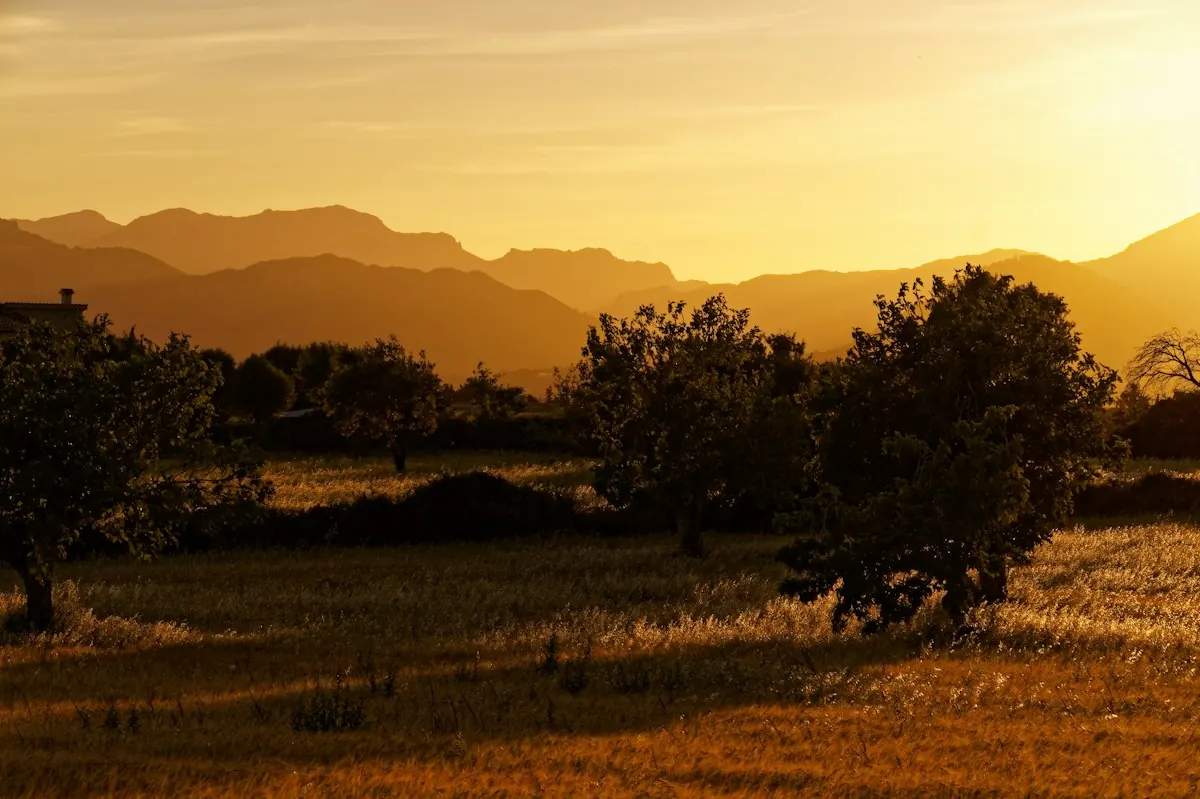
We went up into the Sierra Morena on the evening of the twenty-seventh of August, Sancho because he feared the Holy Brotherhood, I because the mountains are the natural country of adventures. The books are full of knights who found in such wild places the strangest things that ever befell them. I was not disappointed.
01 The Ragged Knight of the Sierra
The valise lay half rotted in a gully, and when Sancho opened it he found four fine linen shirts, a good quantity of gold coins wrapped in a handkerchief, and a little notebook, richly bound. The gold he took, with my permission, as the reward of his labours, and he said it made up for all the blankets in the world. The notebook I took for myself. It was full of sonnets and letters of a very sorrowful kind, all complaining of a lady's cruelty, and I read them with great sympathy.
Soon after we saw a man leaping from rock to rock above us with extraordinary nimbleness, half naked, with a black beard and bare legs and the remains of velvet breeches. When at last he came down to us, he greeted me with great courtesy, and I greeted him with more, and embraced him as though we had known each other for years. He was called Cardenio. He was a gentleman of Andalusia who had lost his reason for love. He told us his story, on condition that we should not interrupt it.
It was this. He had loved, from childhood, a lady called Luscinda, who loved him too. He was sent away to serve a great duke, and the duke's younger son, Don Fernando, became his friend. Cardenio, in an evil hour, praised Luscinda to Don Fernando, and showed her to him, and Don Fernando, who was faithless, fell in love with her himself. In the middle of this, while telling how Luscinda had asked him to lend her the book of Amadís of Gaul, Cardenio happened to mention that Master Elisabat had been the lover of Queen Madásima. I could not let this pass. I told him, with some heat, that it was a great slander and a wicked lie, for Queen Madásima was a most excellent lady and Master Elisabat was a surgeon, nothing more.
Cardenio's madness came back on him in that moment. He took up a stone and struck me with it in the chest, and when Sancho came to my aid he struck Sancho, and he struck the goatherd who had led us there, and then he went off into the rocks very calmly.
02 Why I chose Amadís
It was then, among those rocks, that the great plan came to me. I told Sancho I meant to stay in that wild place and do a penance for love, in imitation of the most famous knights. The painter who wishes to become famous, I explained, copies the best paintings he knows; and in the same way the knight who wishes to excel must copy the best of all knights, who is Amadís of Gaul. Now Amadís, when his lady Oriana scorned him, retired to the Peña Pobre and changed his name to Beltenebros and did penance there. Roland, on the other hand, when he found that Angelica had been with Medoro, went raging mad, tore up trees, muddied the clear streams, killed shepherds, burned huts and committed a hundred other outrages. I would have to choose.
Sancho asked what cause I had, since Dulcinea had never scorned me, nor been with any Moor, nor done me any harm whatever. That, I said, is the very point. For a knight to go mad with good reason deserves neither thanks nor praise; the fine thing is to go mad without one, so that my lady may see what I would do with real cause. I chose Amadís in the end, because tearing up trees seemed beyond me, and because Amadís, without doing any harm at all, achieved fame in his penance through tears and prayers alone.
A knight who runs mad with reason earns nothing. The fine thing is to run mad without one.
03 The letter to Dulcinea
A penance needs a witness, and a lady must be told of it, or it is wasted. I decided that Sancho should ride to El Toboso with a letter. We had no paper, but we had Cardenio's notebook, and I wrote in it, on a blank page, with the greatest care. I give the substance here, though not the words, which belong to her alone. I wrote that the one wounded by absence greeted her, and wished her the health he did not have; that if her beauty despised him, and her worth was not on his side, he would still not leave off suffering; that his good squire would tell her the state he was in on her account; and that if she would help him, he was hers, and if not, she might do as she pleased, for by ending his life he would have satisfied her cruelty and his own desire. And I signed it: Yours until death, the Knight of the Rueful Countenance.
Below it, on the same page, I wrote an order to my niece, to give Sancho three of the five donkey colts I have at home, in payment for those he had lost in my service. Sancho was overjoyed by this. He said it was the best letter he had ever heard, and he made me sign the order twice.
He also insisted, before he left, that he should see some of my penance, so that he could swear to it in good conscience. So I stripped to my shirt and turned two somersaults, heels over head, among the rocks, revealing certain things that Sancho said afterwards he had not asked to see. He turned Rocinante's head and rode off at once, very satisfied that he could now swear I was mad.
04 What Sancho did with it
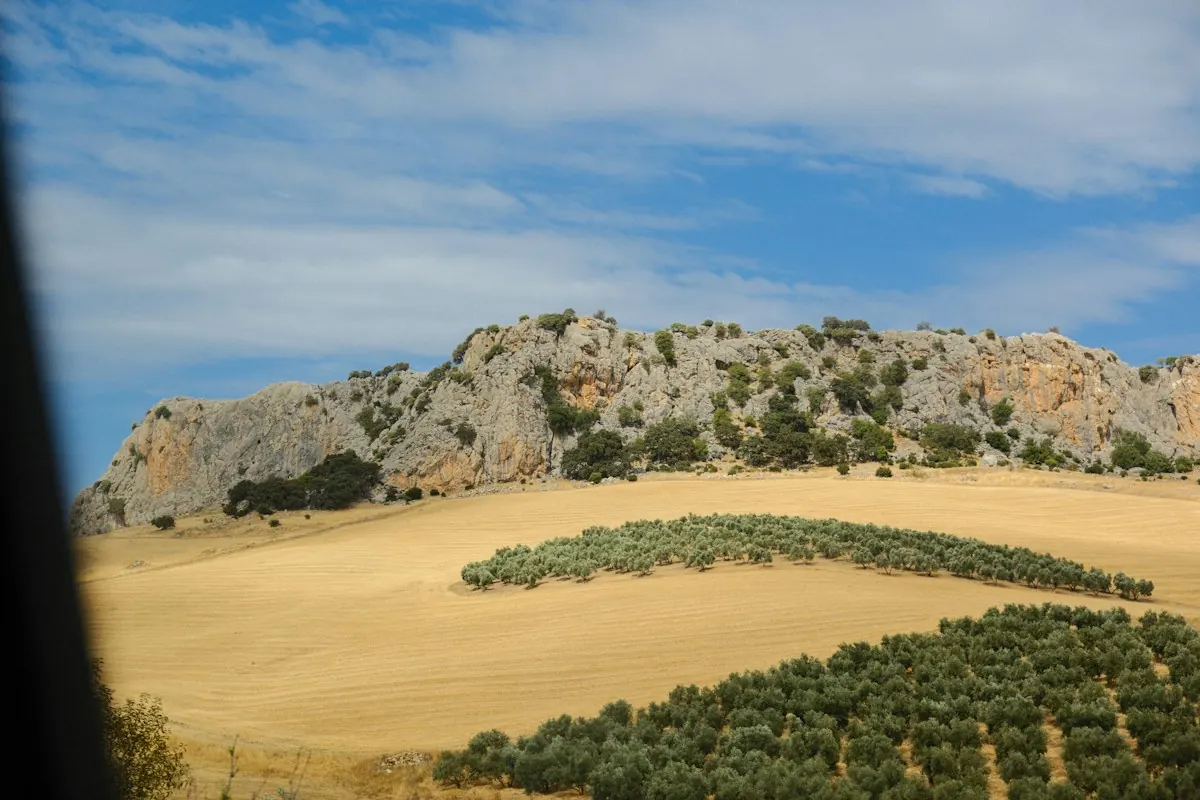
I learned only later, and from his own lips, what became of the letter. Sancho reached the inn where he had been tossed in the blanket, and was standing outside unwilling to go in, when out came the priest and the barber from our own village, who were looking for me. They asked where I was, and he told them everything, and they asked to see the letter, and Sancho put his hand in his doublet for the notebook and found it was not there. It was in my pocket, in the mountains. I had forgotten to give it to him.
He went pale. He tore out half his beard. Then he said it did not matter, because he had it by heart, and he recited it for them. The priest wrote it down. As near as I can gather, Sancho's version opened with a greeting to her high and sorrowed lady, began to wander about her eyes, got lost somewhere in the middle, and ended firmly with the Knight of the Rueful Countenance and the three donkey colts. He recited it three times, and every time it was different, except for the colts, which never changed.
The priest and the barber, who love me, then devised between them a plan to bring me home. They met in the mountains a young lady named Dorotea, of whose wrongs I will write another time, and who had a long story of her own that turned out, by a great coincidence, to be bound up with the same Don Fernando who had wronged Cardenio. She agreed to play a part. So it fell out that, on the sixth of September, Sancho returned to me in the mountains, and with him came a princess.

She was the Princess Micomicona, heiress of the great kingdom of Micomicón in Ethiopia. She knelt at my feet and would not rise until I promised her a boon: to come with her and avenge her on a treacherous giant called Pandafilando of the Gloomy Look, who had usurped her kingdom. She had come all the way to Spain, she said, because of the fame of my name. I raised her up and granted the boon without hesitation, and abandoned my penance at once, as a knight must when a lady in distress has a prior claim. Her squire, a man with an enormous beard that kept slipping, bowed to me very low. I noticed that he sounded a little like the barber of my village, but put it down to the way the barbers of Ethiopia are trained.
I asked him, on the road, what Dulcinea had said and done when he gave her my letter. He told me she had been winnowing wheat in her yard, two bushels of red wheat, and had not read the letter because she was busy, and had told him to put it on the sack; that she smelled, as she worked, a little mannish, from the labour; and that she sent word that I should leave the mountains at once and come to El Toboso. I knew then that he was confused, or enchanted, for the lady of my thoughts does not winnow wheat, and if she did, the grains would turn to pearls in her hands. But it pleased me very much that she had asked for me.
Most wise Cide Hamete, I enclose for the record the true text of my letter. Whatever version you have heard from my squire, believe only the part about the colts.
The Sierra Morena