
 Spain · Summer 1614
Part of: The second sally, with Sancho Panza · 3 of 10
3 · The goatherds' huts · 22 – 24 Aug
Marcela, and a funeral in the hills


Trip details
- When
- 20 Aug – 14 Sept 1614
- How long
- 26 days
- Who went
- Me, Sancho Panza, Rocinante and Dapple
- Stops
- 10
- Getting around
- On horse and donkey, home by ox-cart
In this story · 3 chapters
My ear was still bandaged from the affair with the Biscayan, and Sancho was still sulking over the ointment I had forgotten to make, when the evening of the twenty-second of August found us at the huts of some goatherds in the hills. There were six of them, men burnt dark as their own cooking pots, and they had a stew of goat's meat bubbling on the fire. They asked us nothing. They simply spread sheepskins on the ground, set a wooden bowl before us, and passed the wineskin round as freely as if we had been their brothers.
I insisted that Sancho sit beside me and eat from my own dish, for knight-errantry, like love, makes all men equal. Sancho said he would much rather eat standing up and alone, where he could chew with his mouth open and belch as he pleased, and that ceremony spoiled his appetite. I made him sit regardless. A knight must improve his squire even when the squire resists improvement.
01 A speech over the acorns
When the meat was gone the goatherds laid out a great heap of roasted acorns, and a half-cheese harder than mortar. I took up a handful of acorns, and as I turned them in my palm a thought came over me so strongly that I rose to my feet to give it room.
“Friends,” I said, “there was once an age that the poets called golden. Not because gold was plentiful in it, for gold was the least of its treasures, but because in that age two small words had not yet been invented: mine and yours. A hungry man in those days had only to reach up to the nearest oak, and the oak gave him his supper, as it has given you yours tonight. The bees kept their honey in the hollows of the cork trees and asked no rent for it. The cork trees themselves stripped off their bark, out of pure courtesy, so that men might roof their huts. No ploughshare had yet torn open the kind belly of our first mother, the earth, for she fed her children without being wounded.
“In that age,” I went on, “a maiden could walk from valley to valley with her hair loose and her heart easy, and no one would harm her, and no flattery would deceive her, because flattery had not been born. Justice sat on her own seat, and no favour or bribe dared push her off it. There were no lawsuits, because there was nothing to sue for. But the centuries grew worse, and greed crept in, and the maidens were no longer safe even in the middle of the labyrinths of Crete. And so the order of knights-errant was founded, to defend maidens, to protect widows, and to come to the aid of orphans and the needy. Of that order I am a member, brothers, and I thank you for your hospitality to me and my squire, which every man is bound by natural law to give to knights, but which you gave without knowing it was owed.”
The goatherds listened with their mouths open and said nothing at all, which I took for deep feeling. Sancho went on eating acorns and visiting the wineskin. Afterwards he told me I could have saved my breath, since goatherds know more about acorns than any knight, and that the Golden Age he would like to see is the one where an island falls into a man's lap without his having to be beaten for it. A young goatherd named Antonio then sang us a love song to his rebec, very sweetly, and I would have asked for another but my ear began to throb, and one of the goatherds dressed it with chewed rosemary leaves and salt. It healed better than with any ointment of the apothecaries.
02 Grisóstomo
Late that night a lad came up from the village with news. Grisóstomo was dead, he said, the famous shepherd-student who had studied at Salamanca and come home learned in the stars and in verses, and who had put on a shepherd's smock and gone into the hills for love of a shepherdess named Marcela. That Marcela, the lad said, was the loveliest creature for twenty leagues, rich, an orphan, and so disdainful of every suitor that the whole countryside was littered with young men sighing under the beeches and carving her name in the bark. Grisóstomo had died of it, and he had left word that he was to be buried at the foot of a certain rock, by a spring, where he had first seen her.
I resolved at once to attend the burial. Sancho, who had wanted to sleep in the goatherds' hut, said he would rather go to a wedding. I told him that a squire who attends only weddings will never be trusted with a funeral, and he said that was exactly his plan.
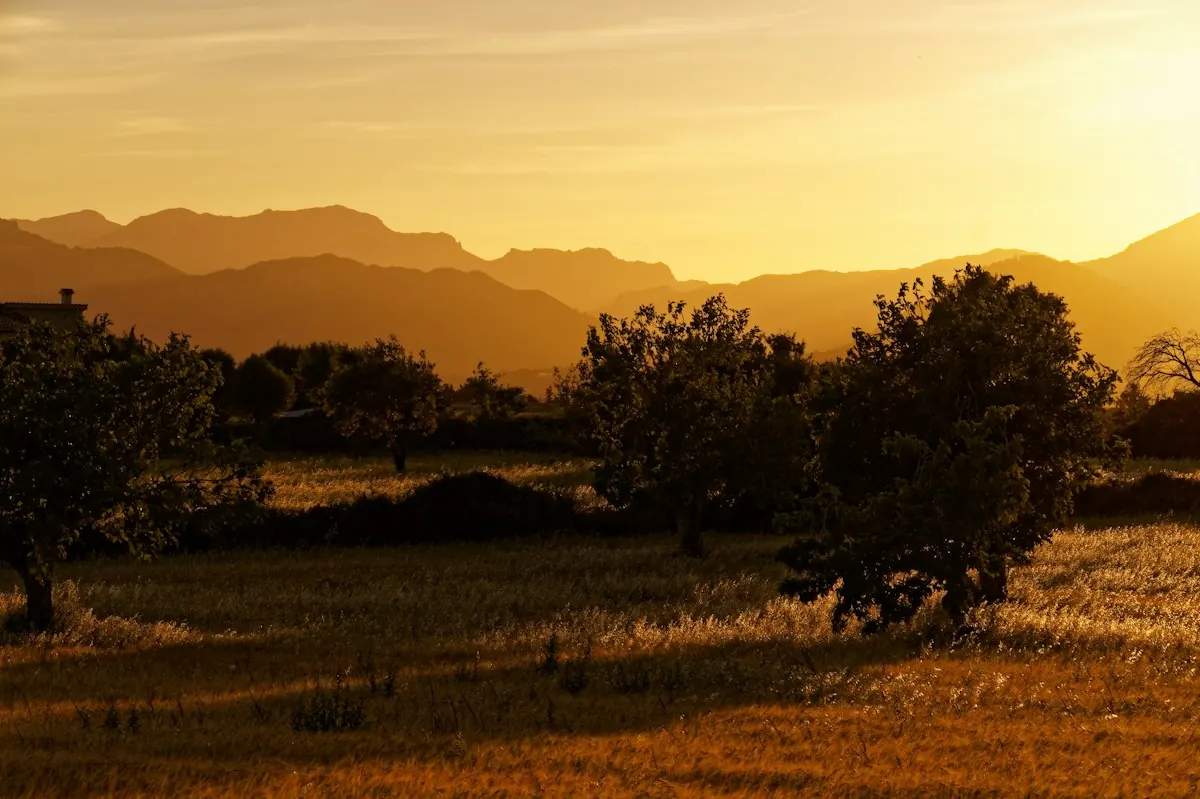
In the morning we went up to the place with a gentleman named Vivaldo and his company, who were travelling the same road. Twenty shepherds in black smocks with crowns of yew and cypress carried the dead young man on a bier strewn with flowers, and with him a heap of papers, which were his poems, for he had asked that they be burned with him. His friend Ambrosio spoke over him very nobly. Vivaldo snatched a few of the papers from the fire and read aloud one song, which was full of despair and accused Marcela of cruelty from the first line to the last. The shepherds wept, and so, I confess, did I, for I could not help imagining what might be said of me should Dulcinea ever prove so hard.
03 Marcela speaks
At that moment she appeared on the top of the rock, above the grave, as though the mountain had produced her for the purpose. The shepherds had not exaggerated. She was more beautiful than her reputation, which is a rare thing in a reputation. Ambrosio cried out at her, asking whether she had come to see her work and to trample on the dead.
She answered him, and the rest of us, without raising her voice. She said she had come to defend herself, since everyone accused her. Heaven had made her beautiful, she said, and they told her that beauty obliges whoever has it to love whoever loves it; but she had not chosen her face, and a viper is not to be blamed for its poison, since nature gave it. She had never promised Grisóstomo anything. She had told him plainly, and all of them plainly, that she meant to live in the hills with her own flock, free, with the trees and the streams for company, and owing her heart to no one. If a man insists on sailing after he has been told the sea is closed, she said, he cannot accuse the harbour of drowning him. She had not killed Grisóstomo; his own stubbornness had. Let those who love her leave her in peace, and let those who do not, ignore her. Then she turned and went back into the thickest part of the wood, and not one of them could think of a reply.
Several of the young men, still burning, made as if to follow her. I placed my hand on my sword and declared in a loud voice that no person of whatever rank or condition should dare to pursue the beautiful Marcela, under pain of falling into my furious displeasure. She had shown with clear and sufficient reasons, I said, that she was not to blame for Grisóstomo's death, that she had never encouraged any lover, and that she wished to live alone, which no law of God or man forbids. Far from being chased, she deserved to be honoured by all good men as perhaps the only woman in the world who lives with so honest a purpose.
Whether it was my words or the sight of my lance, nobody stirred. Sancho told me afterwards it was the lance, and also that he had never seen so many lovesick young men in one place, and that they all looked as if they needed a good bowl of soup and a day's work in a vineyard. I believe that is the most sensible thing he has said since we set out, and I told him so, and he was so pleased that he said several foolish things immediately afterward to restore the balance.
We buried Grisóstomo, and placed the stone, and left. I went looking for Marcela in the wood to offer her my service, for she seemed to me a lady entirely worthy of a knight's protection. I did not find her. I have since decided that this was correct, and that the best service one can render to a person who asks to be left alone is to leave her alone.
Let the sage Cide Hamete Benengeli, when he writes this down, take care to record that I drew my sword for Marcela and not against her. The enchanters will try to confuse the two.
The goatherds' huts, La Mancha
Photos from The goatherds' huts